EXALUNE
Relationships & New Beginnings
Your first solo outing after a breakup
Choosing a place, keeping an easy way home and easing the worry about other people's eyes: a first solo experience on your own terms.

You may already have shopped alone, taken the bus or spent a working day without your ex. But walking into a café alone to spend some time there by choice can feel different. This is not just a task. It may be an experience that once belonged to your shared life.
The first outing does not have to become a major event. You can approach it as a short experiment with permission to change your plan. The aim is not to prove that you need nobody. It is to discover what makes a little time outside more accessible from where you are today.
Choose an outing, not an ordeal
A restaurant on Saturday night is not the only way to go out alone. A walk, exhibition, takeaway coffee or film can meet different interests. Choose according to your curiosity and energy, not what would look brave in a photograph.
If money is limited, a park or library may be enough. If crowds feel tiring, look for a quieter time. If silence makes the loneliness sharper, choose somewhere with people around. There is no atmosphere that suits everyone, and no reason to borrow someone else's idea of a perfect solo afternoon.
Prepare a few details that remove decisions
The place and the journey
You might pick somewhere familiar without too many shared memories, or a new place that is easy to find. Check the opening hours and your route home. An outing that already carries emotional weight does not need the extra uncertainty of a complicated journey.
If you have accessibility needs, check ahead where possible. Practical comfort is part of the preparation. You do not have to put yourself through an awkward or exhausting experience to prove independence. Being able to get there and return comfortably matters more than making the venue impressive.
A flexible length of time
Set a small window rather than a strict target. “I'll have a coffee and see how I feel” leaves more room than “I must stay two hours.” You can leave quickly or stay longer if you want to.
Planning the return does not make the attempt less valid. Knowing that you can leave may make entering feel more manageable. No waiter, passer-by or article gets to decide how long your first solo experience should last. You can choose a short outing even on a day when you think you ought to be capable of more.
The doorway may carry the most uncertainty
You arrive and hesitate. There are couples inside or a group at one of the tables. The scene may remind you of what is no longer there. That feeling does not prove you have tried too soon. It is information you can listen to.
Slow down, look at the menu, walk a little further or choose a simpler option. If you decide to go home, avoid turning that decision into a verdict. You have learned something about today's energy or this particular setting. Another attempt can be different without needing to cancel out this one.
When you worry about what people think
The thought “Everyone can see I'm alone” may become very loud. You cannot know what other people are thinking, and you do not need to work it out before ordering. Return to a concrete action: choose a seat, look at the menu or ask for what you need.
A simple answer is enough if someone asks how many people: “Just one, thank you.” You do not owe an explanation of the breakup. If a book, headphones or your Journal gives you support, bring it. Having something with you does not turn the outing into a false version of independence. Comfort is not cheating.
A small scene without a required outcome
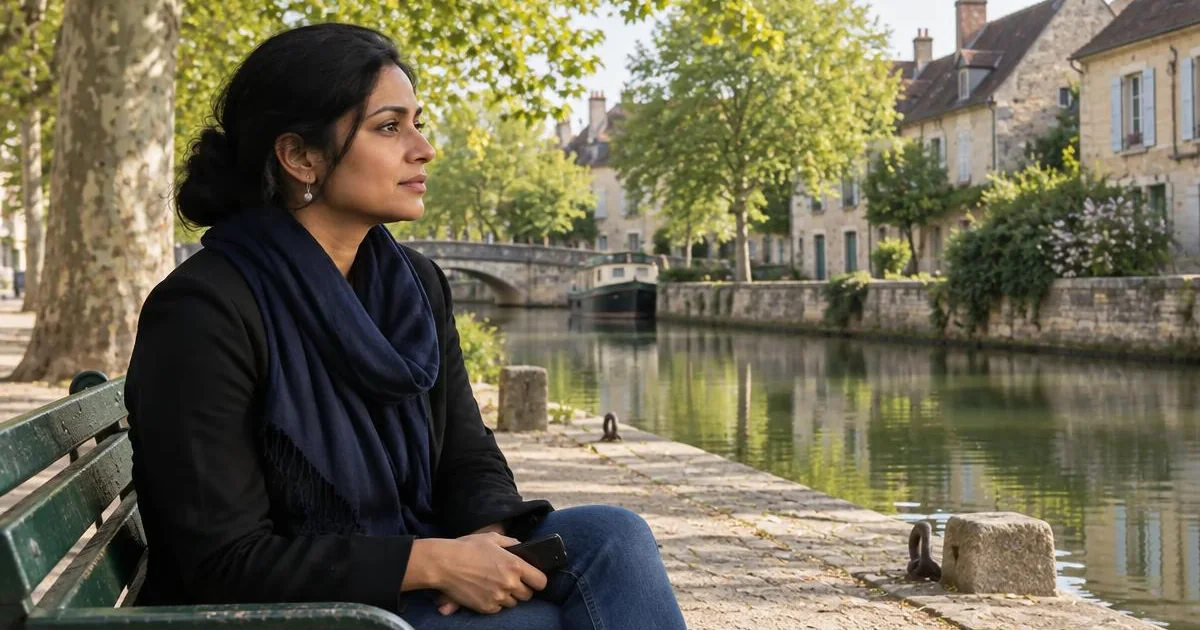
Imagine choosing an outdoor table in the afternoon. You order, then notice somewhere you and your ex might once have sat together. The longing returns. You can let it exist while also looking at something else: the cup, the trees or the movement of the street.
Perhaps the moment becomes enjoyable. Perhaps it stays mixed. You can finish your coffee and leave with two feelings at once. An outing does not have to replace sadness with happiness to belong in your day.
Afterwards, ask what suited you: the time, being close to home, having something to watch? And what might you change: stay for less time, pick another place, take a walk first? These questions offer more useful information than giving the experience a pass or fail. You are allowed to learn what helps without pretending the whole thing was easy.
Fit the experience to your actual life
If you care for children or relatives
A solo outing may require considerable organisation. A brief window during an existing activity might be more realistic than a whole evening. You do not need to compare yourself with someone who has an entire weekend available. The time can be valuable even when it is short and must be arranged carefully.
If you already spend a lot of time alone
The challenge may not be going out without company. It may be choosing an outing for your own enjoyment rather than necessity. Try something that genuinely interests you, even if it is ordinary. Independence is not measured by how many hours you spend without anybody nearby.
If you also want connection
Going out alone and looking for company are not incompatible. A workshop or organised visit lets you arrive on your own while sharing an activity. There is no compulsory goal of meeting someone: you can participate, speak as much or as little as you wish and go home.
What can follow the first attempt
You do not need to multiply outings straight away to keep a streak going. Give yourself time to notice what this one offered. You can repeat exactly the same thing or choose another setting. Repetition does not have to become a performance.
The guide to relearning how to be alone looks more broadly at solitude. Returning to outings offers further ideas for spending time with or without company.
You can appreciate having tried without enjoying every minute. You can also decide that today you would prefer someone beside you. This first outing is not an examination of your progress. It is a moment you are allowed to shape to your own circumstances.
Going through this right now?
Answer a few questions to see where you stand, and receive a first exercise to move forward, at your own pace.
Free · No credit card · The articles stay freely available; the Journal requires an account and some activities are Premium.
These suggestions are not medical advice. If distress is persistent, overwhelming or affecting your safety, reach out to a qualified professional or a trusted person.